
Why Your B2B Sales Team Is Busy But Not Building Pipeline
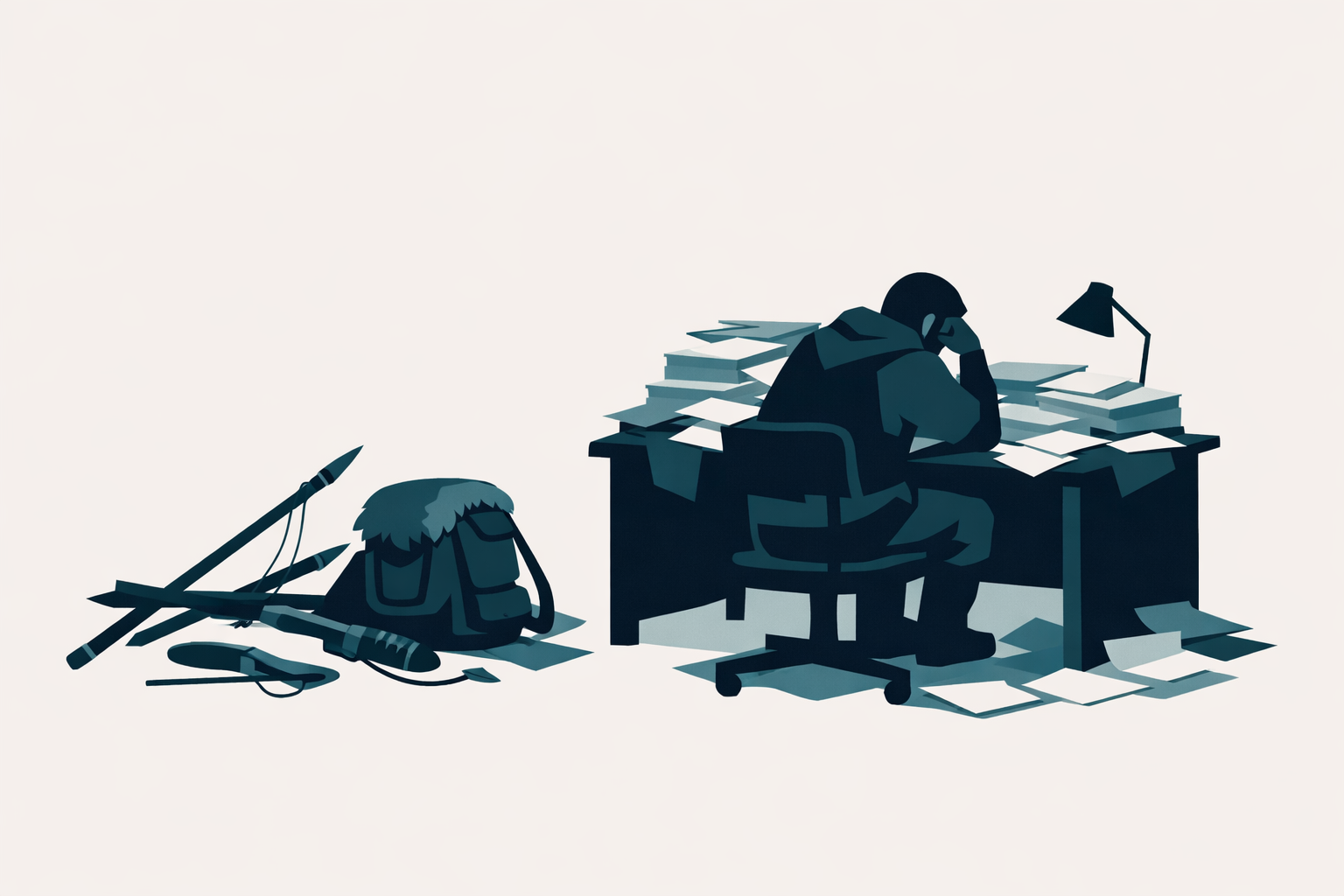
Early in my career, I worked as a sales controller supporting one of those sales managers you never forget. He would come into the office once, maybe twice a week. When he was in, he was usually the last one to leave. He spent most of his time on the phone, and when he wasn't on the phone, he was asking me for a quote, or telling customer service to pull a claim report for his next meeting, or asking someone to update the CRM while he dictated notes from the car.
We were all in awe of him. The stories were legendary. Deals sealed over expensive red wine, signed on a napkin. Invitations to yacht parties from clients who had become friends over decades. To a young sales controller, it looked like the dream.
Fast forward ten years and that world is gone.
What changed
The increased integration of today's business systems, CRM platforms, ERP software, forecasting tools, reporting dashboards, meant that companies started cutting sales support roles and handing the admin directly to the salespeople. Why pay a sales controller when the sales manager can log their own orders, update their own forecast, and generate their own reports?
It seemed logical at the time. It was, in hindsight, one of the more expensive decisions many B2B organisations quietly made.
My old sales manager used to tell me that when he started, two decades before I met him, he didn't even have a laptop. If he needed to call the office, he stopped at a phone booth. Someone else put his orders in. In his view, life was so much easier then. He had no idea what was coming.
The self-fulfilling prophecy
Today's B2B sales manager logs orders, manages claims, maintains CRM records, prepares forecasts, writes visit reports, and sits in internal meetings that have nothing to do with selling. By the time all of that is done, prospecting feels like something to get to later. And later never comes.
Here is where it gets interesting, and a little uncomfortable. Psychology tells us that when we stop doing something regularly, we don't just get rusty. We start avoiding it. The mechanism is well documented: the less frequently we perform a behaviour, the more unfamiliar and uncomfortable it becomes, and our brains are wired to steer us away from discomfort. Each time we avoid something, the avoidance itself is reinforced, making it more likely we will avoid it again next time. It is a loop, and it is very hard to break from the inside.
The hunting muscle atrophies. Gradually at first, then completely. The salesperson who used to cold call without thinking twice now finds a reason to send an email instead. The one who used to book three prospecting meetings a week now struggles to book one a month. And crucially, they have convinced themselves that this is fine, that they are too busy, that outbound doesn't really work in their industry anyway.
This is the self-fulfilling prophecy. Not enough outbound leads to an uncomfortable feeling around outbound, which leads to less outbound, which leads to an emptier pipeline, which creates pressure, which makes outbound feel even more daunting. Round and round it goes.
What actually breaks the cycle
The answer is not a motivational speech, a new incentive scheme, or another training day about the importance of prospecting. Those things address the symptom, not the mechanism.
What breaks the cycle is removing the friction and rebuilding the habit with a structured, repeatable system that makes outbound feel manageable again. Short, protected time slots dedicated to prospecting, not when there is time left over, because there never is, but carved into the weekly routine as a non-negotiable. Simple tools that mean a salesperson can reach out to and follow up with tens of prospects in thirty minutes, without having to think about what to write or who to target.
When outbound stops feeling like a mountain and starts feeling like a routine, the avoidance loop breaks. The muscle comes back. Pipeline becomes predictable again.
That is exactly what Sprint4™ is designed to do. Not to add to the workload of an already overloaded sales team, but to give them back the one thing that actually moves the needle, and make it easy enough that they will actually do it.
